
Reference:
Food supplement based on astaxanthin, glycine, taurine, quercetin, trans-resveratrol, vitamins C-E, zinc, selenium and manganese.
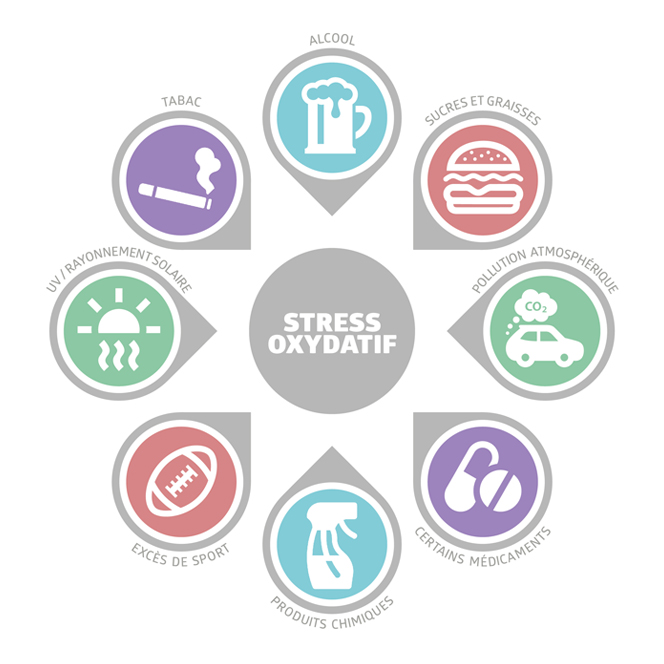
ANTI OXY+ is a multi-source antioxidant complex designed to support redox balance and help support the body's antioxidant defences on a daily basis. Its formula combines 10 complementary active ingredients, including astaxanthin, plant polyphenols, amino acids and essential micronutrients. Vitamin C, vitamin E, zinc, selenium and manganese contribute to the protection of cells from oxidative stress.
New formula.
 Free shipping from 100 CHF of purchase
 Shipped within 24 hours
 Simple and secure payment



Data sheet
Food supplement based on astaxanthin, glycine, taurine, quercetin, trans-resveratrol, vitamins C-E, zinc, selenium and manganese.
ANTI OXY+ is a multi-source antioxidant complex designed to support redox balance and help support the body's antioxidant defences on a daily basis. Its formula combines 10 complementary active ingredients, including astaxanthin, plant polyphenols, amino acids and essential micronutrients. Vitamin C, vitamin E, zinc, selenium and manganese contribute to the protection of cells from oxidative stress.
New formula.